Bing Now Shows Which AI Search Topics You're Missing
Microsoft rolled out a beta feature called Topics Portfolio inside Bing Webmaster Tools on October 13, grouping AI-answer citations by theme and flagging queries where rivals get cited and your site doesn't. For marketing teams betting on AI visibility, it's the first real window into where that effort is landing.
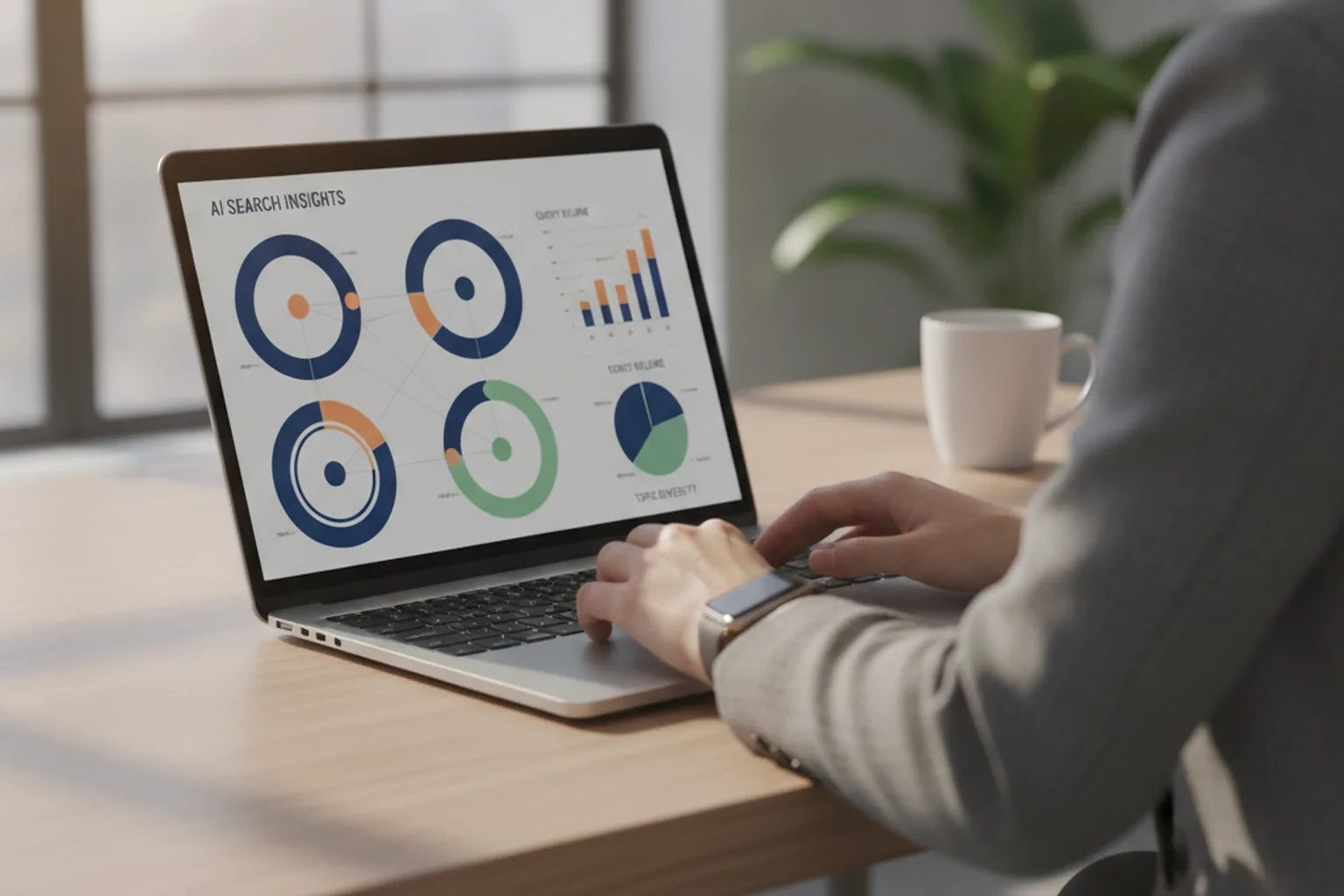
On October 13, Microsoft announced a beta addition to Bing Webmaster Tools' AI Performance report called Topics Portfolio, as detailed on the official Bing Webmaster blog and confirmed by Search Engine Land. Instead of showing AI citation data one query at a time, the tool clusters the grounding queries where a site gets cited in AI-generated answers into broader topics, things like "tax planning," "wedding venues," or "project management software," so a team can see the overall shape of its AI presence rather than scrolling through an endless query list.
The headline feature is what Bing is calling Top Opportunity Queries: a list of queries inside each topic where competing sites are being cited by AI answers and yours is not. That is new. Google Search Console still reports impressions and clicks at the page and query level, but it has never told a site what its AI visibility gap actually looks like compared to named or unnamed competitors inside a topic cluster.
What the Report Actually Shows
Each topic in the portfolio surfaces three approximate metrics: Topic Size (an estimate of total citations across every site in that topic during the selected window), Sites Cited (roughly how many different sites appear across queries in that topic), and Queries (the approximate number of distinct grounding queries feeding the topic). None of the numbers are exact counts, Microsoft is explicit that they are estimates, but the shape of the data is still useful: a site can now see whether it has broad, shallow presence across many queries in a topic or narrow, concentrated presence on just a handful.
The Top Opportunity Queries list is the more actionable part. It shows specific queries within a topic where a site currently gets zero citations while other sites do, with citation volume shown as a range rather than a precise number. For a content or marketing team, that is effectively a prioritized to-do list: these are the exact questions people are asking AI assistants inside your topic area, and other sites are answering them better right now.
Why This Matters If You Don't Sell Search Software
It is easy to file this under "technical SEO news" and move on, but the practical implication lands squarely on content strategy, not on a developer's plate. AI answer engines like Bing's Copilot, and increasingly Google's AI Overviews, pull from pages that answer a specific question clearly and completely, often from sections deep inside a page rather than the headline or meta description. A professional services firm or nonprofit that has never thought about "which AI assistant cites us" now has, for the first time from a major search engine, a free tool that names the exact gap.
For a marketing director at a law firm, accounting practice, healthcare group, or nonprofit, the relevant question is no longer just "do we rank." It's "when someone asks an AI assistant a question in our topic area, does our content get pulled into the answer, or does a competitor's?" Topics Portfolio is the first mainstream tool built to answer that directly, and it is free inside an account most sites already have.
The report doesn't just tell you how you're doing. It tells you, query by query, where a competitor is winning the citation and you're not even in the conversation.
What to Do With It This Month
If your site is verified in Bing Webmaster Tools, the Topics Portfolio beta is worth a look before your next content planning cycle, not after. A few practical steps:
- Open the AI Performance report and check whether Topics Portfolio has rolled out to your account yet; Microsoft is rolling it out gradually as a beta.
- Scan the Top Opportunity Queries list for your core service topics and treat each one as a candidate for a dedicated page or section, written to answer that exact question in the first few sentences.
- Compare Topic Size and Sites Cited across your main topics to see where the competitive field is wide open versus where a handful of sites already dominate citations.
- Cross-check against your existing SEO fundamentals; a page that already ranks well on Google but still isn't cited in AI answers usually needs a direct, self-contained answer added near the top, not a rewrite.
None of this requires a site to chase every AI platform individually. It requires treating "will an AI assistant quote this paragraph accurately" as a real content requirement alongside keyword targeting and readability, the same discipline that already goes into a solid content marketing framework.
The Takeaway
AI visibility has mostly been guesswork for marketing teams outside of enterprise tooling budgets. Bing's Topics Portfolio is a genuinely useful, free step toward making that visibility measurable and, more importantly, actionable at the query level. If your team hasn't looked at its Bing Webmaster Tools account recently, this is a reasonable week to start. If you want a second set of eyes on which of your pages are positioned to earn AI citations and which need a rewrite, book a free consultation and we'll walk through it with you.
Not sure if your content is earning AI citations?
Book a free consultation and we will help you find and close the AI visibility gaps that matter most.