42% of Big-City Government Websites Have a Critical Accessibility Barrier, New Scan Finds
A July 2026 scan of 158 large U.S. city websites by accessibility-testing firm AccessLumens found that 42% had at least one critical barrier, and 45% had unlabeled buttons or form fields, the single issue most cited in accessibility lawsuits. The finding lands as a federal deadline requiring WCAG 2.1 AA compliance closes in on cities of 50,000 or more residents: April 26, 2027.
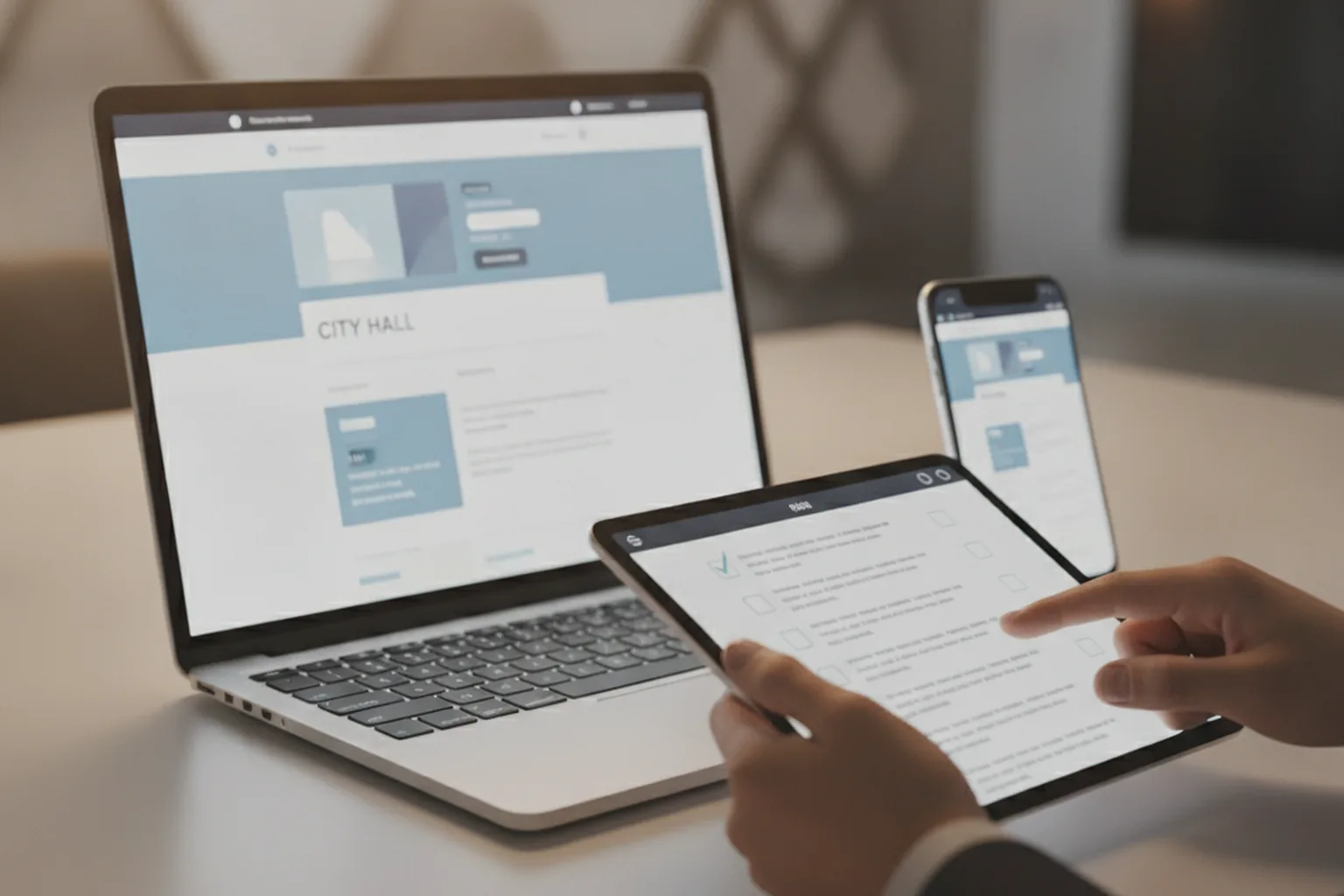
A city website looks simple from the outside: pay a bill, book an appointment, check a meeting agenda. For a resident who uses a screen reader, the same task can stop cold at a "Pay now" button the software announces as nothing at all. Reporting from Stacker, syndicated by KESQ, lays out the scale of the problem using a July 2026 scan commissioned by accessibility vendor Clym: of 158 large city government websites tested, 42% had at least one critical barrier, such as a button a screen reader can't identify or a menu that can't be reached without a mouse.
That finding doesn't stand alone. WebAIM, an accessibility research group at Utah State University, separately scanned the home pages of the 1 million most-visited websites in early 2026 and found detectable accessibility failures on 95.9% of them. Two independent datasets, one narrow and one massive, point at the same gap between how websites are built and how many people can actually use them.
What Changes in April 2027
Title II of the Americans with Disabilities Act already requires state and local governments to make their services accessible. What's new is that a Department of Justice rule now spells out exactly what "accessible" means online: government websites and mobile apps must meet the Web Content Accessibility Guidelines (WCAG) 2.1, Level AA. That standard covers things like alt text on images, forms that work without a mouse, and buttons a screen reader can announce correctly.
Governments serving 50,000 or more residents have until April 26, 2027. Smaller and special-district governments get until April 26, 2028, under an April 2026 rule that pushed both dates back a year without loosening the standard. The scope reaches past city hall to transit agencies, public libraries, and public colleges, a wide band of public-facing digital properties that firms and agencies regularly get pulled in to build, redesign, or maintain.
Why This Matters Beyond City Hall
Unlike a retail brand, a government agency has no competitor for a resident to switch to when a site doesn't work for them. But the same underlying problem (unlabeled buttons, keyboard traps, low-contrast text) shows up constantly in commercial and nonprofit sites too, and it's exactly what shows up in ADA website lawsuits that target private companies, not just governments.
The Redesigned Page Isn't Always the Risky One
The AccessLumens scan notes that homepages were more likely to have a critical barrier than the payment or contact pages behind them, which tracks with a pattern we see across client work: the page everyone reviews carefully in a redesign kickoff is rarely the one that quietly breaks for a screen reader user eight months later.
Mid-Size Organizations Feel the Staffing Gap Most
The scan also found that mid-size cities (100,000–250,000 residents) struggled more than the largest ones: 44% had a critical barrier versus 13% of cities over 1 million residents. The report attributes the gap to thinner in-house technical staff, not lower priority. That's the same resourcing math most professional-service firms and nonprofits already live with: nobody on staff owns "check accessibility compliance" as a job, so it gets checked never, or only after a complaint.
- If your firm has public-sector or publicly funded nonprofit clients, this deadline is theirs whether they've heard of it or not, so flag it before a vendor RFP or budget conversation forces the issue.
- Automated scans catch real problems but not all of them. AccessLumens is explicit that its results are "a diagnostic snapshot, not a legal conformance determination." A passing automated score doesn't mean a real screen-reader user can complete the task.
- Fixing this at scale usually means dev capacity most firms don't carry in-house. Remediating labeled buttons, keyboard navigation, and form accessibility across an existing site is detail work that benefits from developers who do it regularly, not a one-off project squeezed into a designer's week.
That capacity question is where a lot of agencies get stuck: the accessibility audit itself is manageable, but the remediation work that follows is ongoing and technical in a way that doesn't fit neatly into a fixed-scope project. Firms that don't want to carry that specialization full-time are increasingly choosing to hire dedicated web developers for the stretch of work, rather than quoting it as a one-time fix that's hard to staff consistently.
What to Do Before the Deadline Pressure Builds
Waiting for a lawsuit or a budget cycle to force the issue is the expensive way to handle this. A faster path: pull a short list of every client site that's public-facing or publicly funded, run it through a free automated scanner as a first pass, and flag anything that touches forms, navigation menus, or payment flows for a closer manual look. Those are consistently the places AccessLumens and WebAIM both found the most critical failures.
If an accessibility pass across a client roster turns up more gaps than expected, book a free consultation and we can help you think through what a realistic remediation plan, and the right development capacity to run it, actually looks like.
Not sure if your client sites are compliant?
Book a free consultation and we will help you turn these ideas into a plan.