The Case for a Brand Style Guide (Even for a Small Firm)
A brand style guide isn't just for big companies. Here is what a small firm's guide should include and why it quietly saves time, money, and branding headaches.
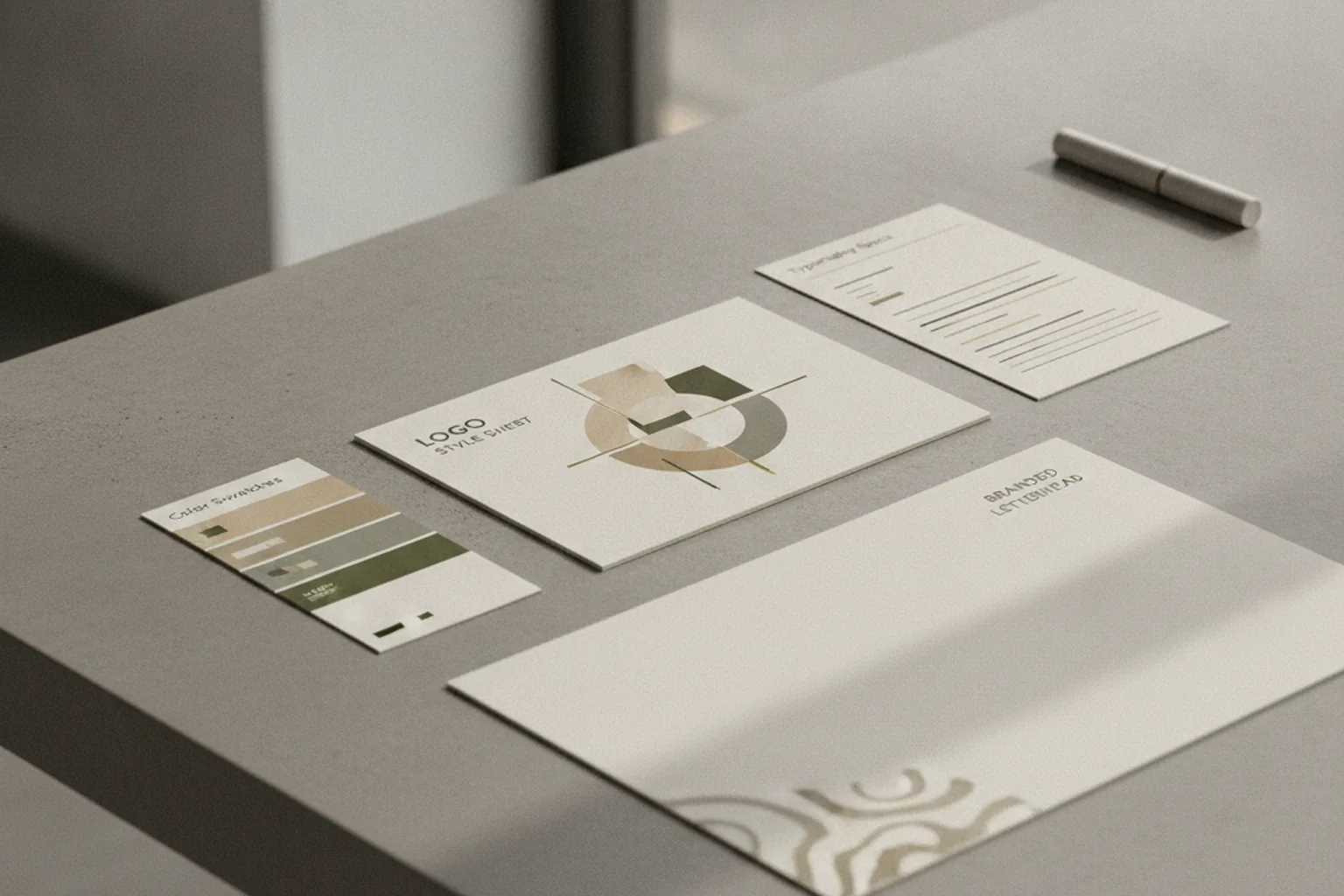
A brand style guide sounds like something only a company with a marketing department and a logo on a skyscraper needs. It is not. For a five-person consulting firm or a small nonprofit, a short, plainly written style guide is the difference between a brand that holds together across every proposal, email, and social post, and one that quietly drifts a little further apart every time someone new touches it.
Most small firms skip this step entirely. They have a logo file, maybe a tagline, and an unspoken sense of "how we sound" that lives in the founder's head. That works fine right up until the firm grows past one person writing everything, and at that point the gap becomes visible to clients before anyone internally notices it. If your team is weighing whether to build a formal reference document or keep relying on institutional memory, it is worth understanding what a style guide actually does before deciding you can live without one.
What Is a Brand Style Guide, Really?
A brand style guide is a short reference document that spells out how your brand should look and sound across everything it touches: your logo and its acceptable uses, your color palette, your typefaces, the kind of imagery that fits your brand, and notes on voice and tone. It is not the same thing as a logo file. A logo file is one asset. A style guide tells you how that asset is allowed to be used, what it should never be paired with, and what else belongs alongside it.
It is also not the same thing as a full brand strategy document. Brand strategy answers deeper questions: who you serve, what you stand for, how you are different from competitors, what story you are telling. A style guide assumes those answers already exist and translates them into usable rules. Think of brand strategy as the thinking, and the style guide as the short reference anyone on your team can open in two minutes to get a visual or verbal decision right.
Why Small Firms Think They Can Skip This — and Why That's a Mistake
The most common objection is simple: "We're only a handful of people. Everyone already knows how we sound and what we look like." That is true right up until it isn't. A firm of five knows how it operates today. It does not account for the associate who joins next quarter, the freelance designer brought in for a single project, or the founder who is too busy during a launch week to personally review every slide before it goes out.
A style guide is not a sign of bureaucracy. It is a sign that you have decided your brand is worth protecting even when you are not in the room. Firms that skip it are not saving time; they are deferring the cost to a future moment when something inconsistent reaches a client, and by then it is harder to trace and more expensive to fix. The smaller the firm, the more a single inconsistency stands out, because there is no large brand presence to absorb the noise.
What Breaks Without One, Specifically at a Service Firm
The damage from skipping a style guide rarely shows up as one dramatic failure. It shows up as a series of small mismatches that, together, make a firm look less organized than it actually is. A few scenarios that play out constantly at professional service firms and nonprofits:
- A partner builds their own slide deck for a pitch meeting and uses a blue that is close to, but not quite, the brand's actual color. The prospect never consciously notices the difference, but the deck feels slightly off compared to the firm's website, and that small friction registers as a lack of polish.
- A new hire needs a one-off flyer for a local event and, with no reference to work from, recreates the logo from memory, stretches it to fit, and picks a typeface that happens to be installed on their laptop. The flyer goes out to real prospective clients looking like it belongs to a different company.
- The website uses one typeface, the email signature template uses another, and the PDF proposal template uses a third. None of it is wrong exactly, but across three touchpoints in a single client interaction, nothing feels like it was designed by the same team.
- At a nonprofit, a donor appeal letter goes out with language and visuals that do not match the organization's website or annual report, right as a major donor is deciding whether to renew their support. Consistency builds trust in fundraising the same way it builds trust in sales, and a mismatch at the wrong moment costs more than it should.
None of these individually sinks a client relationship or a donor renewal. But a prospect or donor who encounters three or four small inconsistencies across a single decision cycle starts to wonder, even subconsciously, whether the organization behind the materials is as careful with everything else as it claims to be.
What a Useful Style Guide Actually Covers
A useful style guide for a small firm does not need to be exhaustive. It needs to cover the handful of decisions that get made most often, by the most people, without a designer in the room. At a strategic level, that typically means:
- Logo usage rules — the approved versions of your logo, minimum sizing, clear space around it, and what backgrounds it should never sit on.
- A defined color palette — your primary and secondary colors, named clearly enough that anyone can reference them without guessing, so "the brand blue" means the same thing to everyone.
- One or two approved typefaces — a heading font and a body font, with guidance on when each is used, so new documents do not default to whatever came installed on someone's computer.
- Imagery and photo style — whether your brand leans toward candid team photography, stock imagery, or a specific color treatment, so a new hire does not drop in a mismatched stock photo out of convenience.
- Voice and tone notes — a short description of how your firm sounds in writing: formal or conversational, direct or warm, and a few words you consistently use or avoid.
Notice what is missing from that list: exact hex codes for every possible tint, a library of logo lockups for every conceivable use case, a 40-page manual nobody will read. A style guide that is useful to a small firm is one people will actually open, which means it needs to be short enough to scan in a few minutes and specific enough to settle a real decision.
Who Needs to Use It — Not Just Your Designer
Here is where small-firm style guides differ most from what you will read in generic branding content aimed at design studios: the person most likely to reach for your style guide is probably not a designer at all. It is the partner building a pitch deck, the associate drafting a proposal, the office manager ordering business cards, or the volunteer coordinator at a nonprofit putting together a newsletter.
Every one of those people is representing your brand, usually without thinking of it that way, and usually without design training. A style guide gives them a fast, confident answer instead of a guess. That is its real job at a service firm: not to constrain a creative department, because most small firms do not have one, but to give non-designers a reliable reference so the brand stays recognizable no matter who is building the next piece of client-facing material. The fewer design-literate people on your team, the more this matters, not less.
How a Style Guide Actually Saves Time and Money
The time savings are concrete, not abstract. Without a style guide, every new piece of marketing or client-facing material starts with a round of back-and-forth: "Which logo file is correct?" "What font do we use for headers?" "Is this the right blue?" Multiply those small delays across every proposal, every slide deck, every printed piece for a year, and the hours add up quietly.
There is also a direct cost in vendor and print mistakes. A printer who receives an ambiguous color reference will guess, and that guess sometimes means a reprint on your dime. A freelance designer without a style guide will spend part of their billable time reverse-engineering your brand from your website instead of building the thing you actually hired them for. And onboarding a new hire or freelancer goes faster when there is a two-minute document to hand them instead of a verbal explanation that varies depending on who gives it.
None of this requires a large investment to fix. It requires writing down decisions your firm has probably already made informally, once, in a place everyone can find.
Getting Started Without Overbuilding It
You do not need a design agency engagement to get the basics in place. Start with your logo and its usage rules, one color palette, one typeface pairing, and three or four voice and tone notes. That is enough to resolve the majority of day-to-day decisions. You can expand it later as you notice new gaps, like adding photography guidance once you start producing more marketing content, rather than trying to anticipate every future need up front.
Some firms build this document themselves over a weekend, pulling decisions out of the founder's head and into a shared file. That works, but it tends to move faster and hold up better with a short working session alongside a consultant or designer who can ask the questions your team has not thought to ask, like what happens when your logo needs to appear on a dark background, or how your tone should shift between a formal proposal and a casual social post. The goal either way is the same: a document short enough to actually get used, covering the handful of decisions that come up most often.
FAQ
Do I really need a style guide if I'm a one- or two-person firm?
Probably not an elaborate one, but even a solo consultant benefits from writing down their color, font, and tone choices once, especially the moment you bring on a freelancer, virtual assistant, or contractor who will touch client-facing materials.
What's the difference between a style guide and a full brand strategy?
Brand strategy defines who you are, who you serve, and how you are different. A style guide assumes that thinking is done and turns it into practical rules for logo use, color, type, imagery, and voice that anyone can follow without redoing the strategic work each time.
How long should a style guide be?
For most small firms, a handful of pages is plenty: logo rules, a color palette, one or two typefaces, basic imagery guidance, and a short voice and tone section. Longer is not better if nobody reads it.
Can I build one myself, or do I need a designer?
You can build a basic version yourself by writing down decisions your firm has already made. A designer or consultant helps you catch gaps you would not think to ask about and produces a document that looks as polished as the brand it describes.
How often should it be updated?
Review it any time your brand changes meaningfully, like a new logo, a rebrand, or a shift in your service offering, and give it a light annual check even if nothing has changed, just to confirm it still matches reality.
What's the single most important thing to get right first?
Logo usage and your core color palette. Those two things show up in nearly everything your firm produces, and getting them locked down resolves more day-to-day inconsistency than any other single addition to the guide.
Does a style guide apply to a nonprofit the same way it does a for-profit firm?
Yes, and arguably more. Donor trust depends heavily on an organization appearing careful and consistent, and a style guide protects that same consistency across annual reports, appeal letters, and program materials the same way it protects a law firm's proposals and pitch decks.
A brand style guide will not make your firm look bigger than it is, and that is not the point. It makes your firm look like exactly what it is: an organization that pays attention to the details its clients and donors actually notice. If you want help pulling your existing decisions into a working reference your whole team can use, book a free consultation and we will talk through what your firm's guide should cover.
Ready to put this into practice?
Book a free consultation and we will help you turn these ideas into a plan.